
Evaluating Hays County Recreational Land For Your Family
July 23, 2026
July 23, 2026
If you are shopping for recreational land in Hays County, it is easy to fall for the view before you understand the property. A pretty tract can feel perfect for family weekends, future memories, and time outdoors, but the real test is how usable it is for your goals. When you know what to compare, you can avoid expensive surprises and focus on land that truly fits your family. Let’s dive in.
Hays County sits along the Interstate 35 corridor between Austin and San Antonio, with San Marcos as the county seat. Nearby communities like Buda, Dripping Springs, Kyle, Wimberley, and Woodcreek add to the appeal because drive time to town, supplies, dining, and services can shape how often you actually use the land.
The county also puts a clear focus on preserving landscapes, habitat, streams and rivers, spring flow, aquifer recharge, and water quality. That matters if you want land for outdoor enjoyment, because in Hays County the natural setting is a real part of the value, not just a sales pitch.
Before you compare acreage or price, think about how your family will use the property most often. A tract that works well for hiking and exploring may not be the same one that works best for small kids, older relatives, or future improvements.
Try to define your top priorities early. You may want a simple weekend retreat, a place for trails and outdoor gatherings, or land that could support a cabin or full-time home later. Those goals will help you judge the property with more clarity.
A good recreational tract is not just something you own. It is something you can comfortably enjoy. That means thinking about parking, walking distance, shade, places to gather, and whether the terrain supports the kind of time outdoors your family actually wants.
In Hays County, one property may be easy to walk and enjoy right away, while another may be much steeper or more rugged. Matching the tract to your family’s ages, mobility, and habits is one of the smartest parts of the buying process.
Hays County natural areas show how much land conditions can vary across the county. Some areas include compacted surfaces and accessible paths, while others include limestone bedrock, staircases, unimproved trails, steep grades, sinkholes, caves, and springs.
That variation is a helpful reminder for buyers. Two properties with similar acreage can offer very different day-to-day experiences, especially if you plan to walk the land often or create trails and gathering spaces.
When you tour land, look past the view and think about function. Ask yourself whether the topography feels gentle enough for kids to explore, whether older family members could move around comfortably, and whether there is enough usable space for seating, parking, or a future building area.
Rugged land can be beautiful and private, but it may also require more planning and expense to make it usable. Gentler terrain may support easier access and simpler recreation, even if it feels less dramatic at first glance.
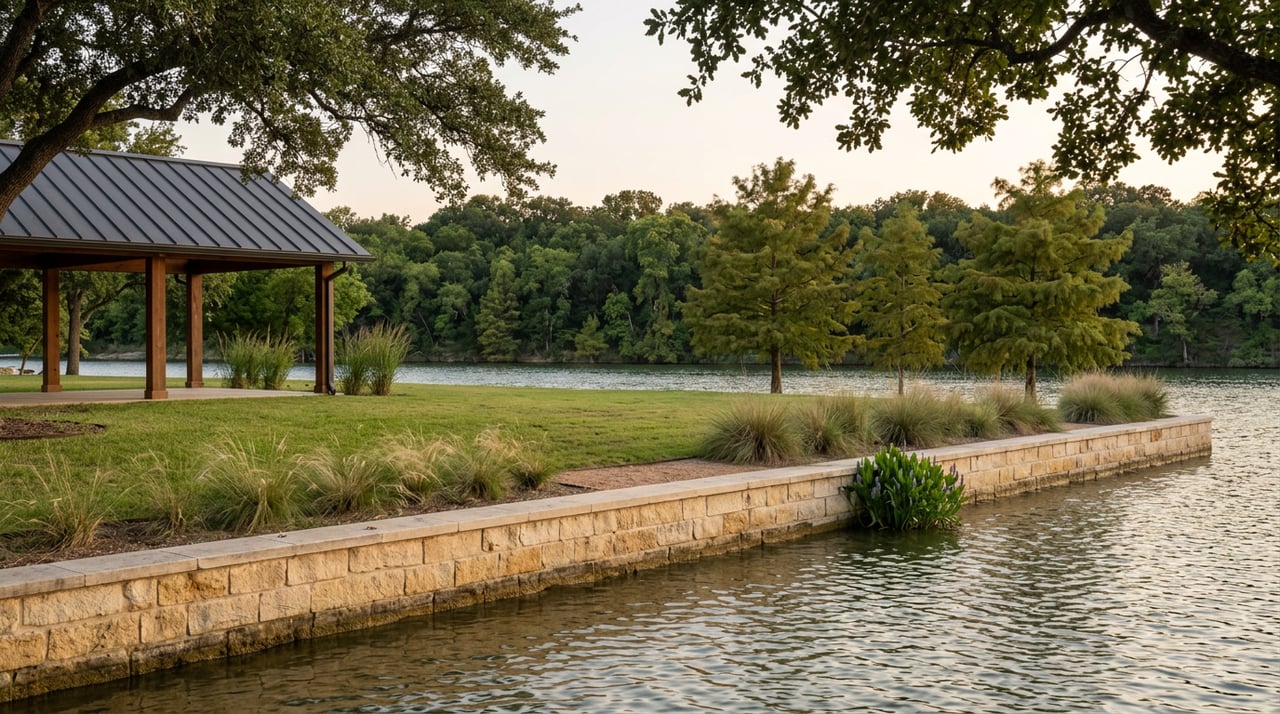
Water is often one of the most attractive parts of recreational land. In Hays County, local natural-resource priorities include streams, rivers, spring flow, aquifer recharge, and water quality, and county natural areas highlight settings near Onion Creek, Dry Cypress Creek, and recharge-zone landscapes.
For buyers, that means water can add enjoyment and character, but it also deserves careful review. Land near creeks, springs, or recharge-sensitive areas may call for extra attention to drainage, erosion, and environmental sensitivity.
If a tract has water nearby or sits in a sensitive natural setting, ask practical questions early. You will want to understand how the site handles runoff, whether there are erosion concerns, and how the natural features may affect future improvements.
A water feature can become a favorite part of the property, but it should also fit your comfort level for maintenance and planning. In many cases, beauty and responsibility come together on the same tract.
One of the first questions Hays County encourages buyers to ask is where the property is located from a regulatory standpoint. You need to know whether it is inside a city, inside an ETJ, or in the unincorporated county, and whether the legal description points to platted property or raw land.
These details matter because they affect what may be required if you improve the property later. They also help you understand whether the tract is ready for straightforward use or whether it comes with extra layers of due diligence.
Access is one of the most important parts of evaluating recreational land. A property may look attractive online, but if access is limited, unclear, or costly to improve, your experience can change fast.
Hays County also handles creation and verification of 9-1-1 addresses, and habitable structures are required to have a 9-1-1 address. If you may someday add a cabin or home, that is not a small detail. It is part of making the property truly functional.
Many land buyers focus first on acreage and scenery, then look at utilities later. In Hays County, that order can lead to surprises. The county development process specifically asks buyers to identify the source of water and wastewater early.
If you plan to improve the land at some point, utility questions should move close to the top of your list. A tract that feels affordable today may become much more expensive if it needs a long driveway, utility extensions, septic work, or drainage improvements.
Hays County states that an OSSF permit is required for all on-site sewage facilities regardless of lot size or acreage. The county also notes that aerobic or advanced treatment systems require ongoing maintenance.
That means wastewater planning is not just a technical detail. It is part of the long-term cost of owning and improving the property, especially if your weekend retreat may become a residence later.
Flood risk deserves serious attention when you evaluate recreational land in Texas. Hays County notes that flooding is the number one natural disaster in Texas, and FEMA flood maps are used to identify flood-prone areas and determine flood-insurance requirements.
Even if you are not planning immediate construction, floodplain issues can affect access, future building locations, drainage costs, and overall peace of mind. This is one of the areas where early review can save time and money.
As you compare properties, ask whether any part of the tract sits in a floodplain and how that may affect use. Also ask how water moves across the land during heavy rain and whether low spots, creek areas, or road crossings could limit access.
A tract can still be appealing if it includes flood-prone areas, but you need to understand what that means for your plans. Clear expectations help you buy with confidence.
In Hays County, value is not just about how many acres you get. Hays CAD notes that qualifying land may receive 1-d-1 open-space agricultural use appraisal or wildlife-management valuation, while non-qualifying land is valued at market value, and improvements are appraised separately.
The district also notes that land types are determined by condition, soil, and vegetation cover. That helps explain why two tracts with the same acreage can differ so much in usability, upkeep, and long-term cost.
If taxes and holding costs are part of your decision, it is smart to ask how the tract is currently appraised and whether that status reflects qualifying use. You should also understand that recreational appeal alone does not automatically tell you how the property will be valued.
This is one reason buyers often benefit from a practical review team. Questions about appraisal status, land condition, and future plans can all influence the real cost of ownership.
Hays County recommends asking early whether a project needs an engineer, surveyor, geoscientist, or other licensed professional. The county also offers pre-application meetings for more complicated projects.
For many families, the right support team may include a surveyor, a septic professional, a tax advisor, and a land-focused real estate advisor. That kind of review can help you understand not just whether you like the property, but whether it truly works.
As you narrow your options, keep these questions in front of you:
The best recreational land in Hays County is not always the flashiest property or the one with the biggest headline feature. It is the tract that fits how your family wants to spend time together, supports your long-term plans, and makes sense from an access, utility, and stewardship standpoint.
When you evaluate land through both a lifestyle lens and a practical one, you put yourself in a much stronger position. If you want experienced guidance on comparing recreational tracts in Hays County, Cullen Loeffler can help you look beyond the brochure and focus on what truly matters.
Stay up to date on the latest real estate trends.



Experience honest service, local expertise, and strategic representation from a team dedicated to your success.